TRABALHO COMO PRODUÇÃO DO VIVER
consequências políticas para o feminismo
DOI:
https://doi.org/10.22478/ufpb.1517-5901.2020v1n53.51440Resumo
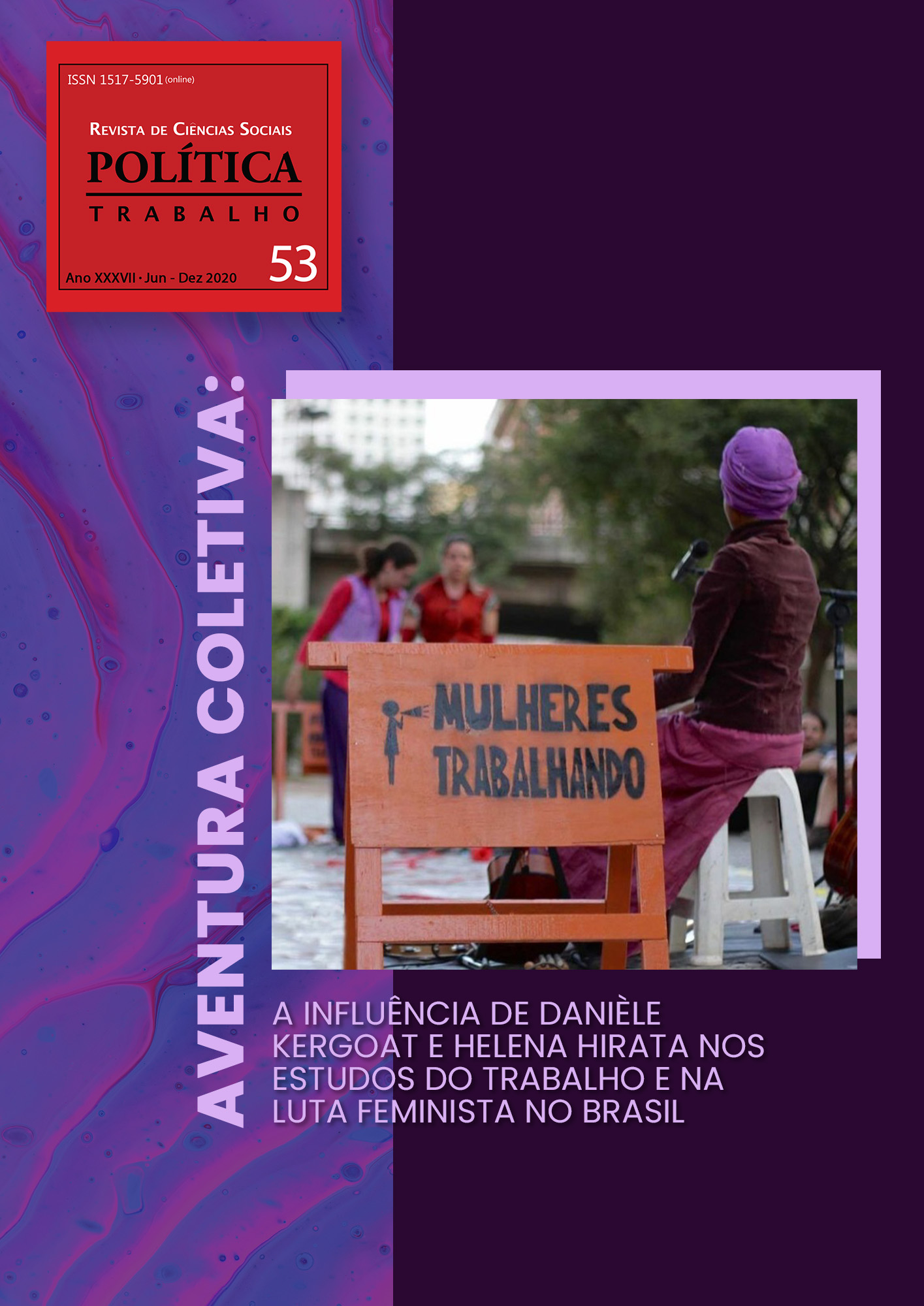
Situadas em uma perspectiva feminista materialista e libertária, as formulações teóricas de Danièle Kergoat e Helena Hirata têm sido pensamento inspirador de um feminismo de esquerda e popular, em que a centralidade do trabalho na organização das dinâmicas e relações de dominação e desigualdade é tema fundante. Este texto apresenta uma interpretação sobre os vínculos entre elaborações teóricas e suas consequências políticas em contextos situados. Para isso, lançamos o olhar para a influência do pensamento destas duas autoras em um campo do feminismo no Brasil enraizado no movimento popular e sindical, influência, esta, evidenciada nas agendas feministas de enfrentamento ao neoliberalismo, em que o trabalho como produção do viver (e as trabalhadoras) tem centralidade.
Downloads