
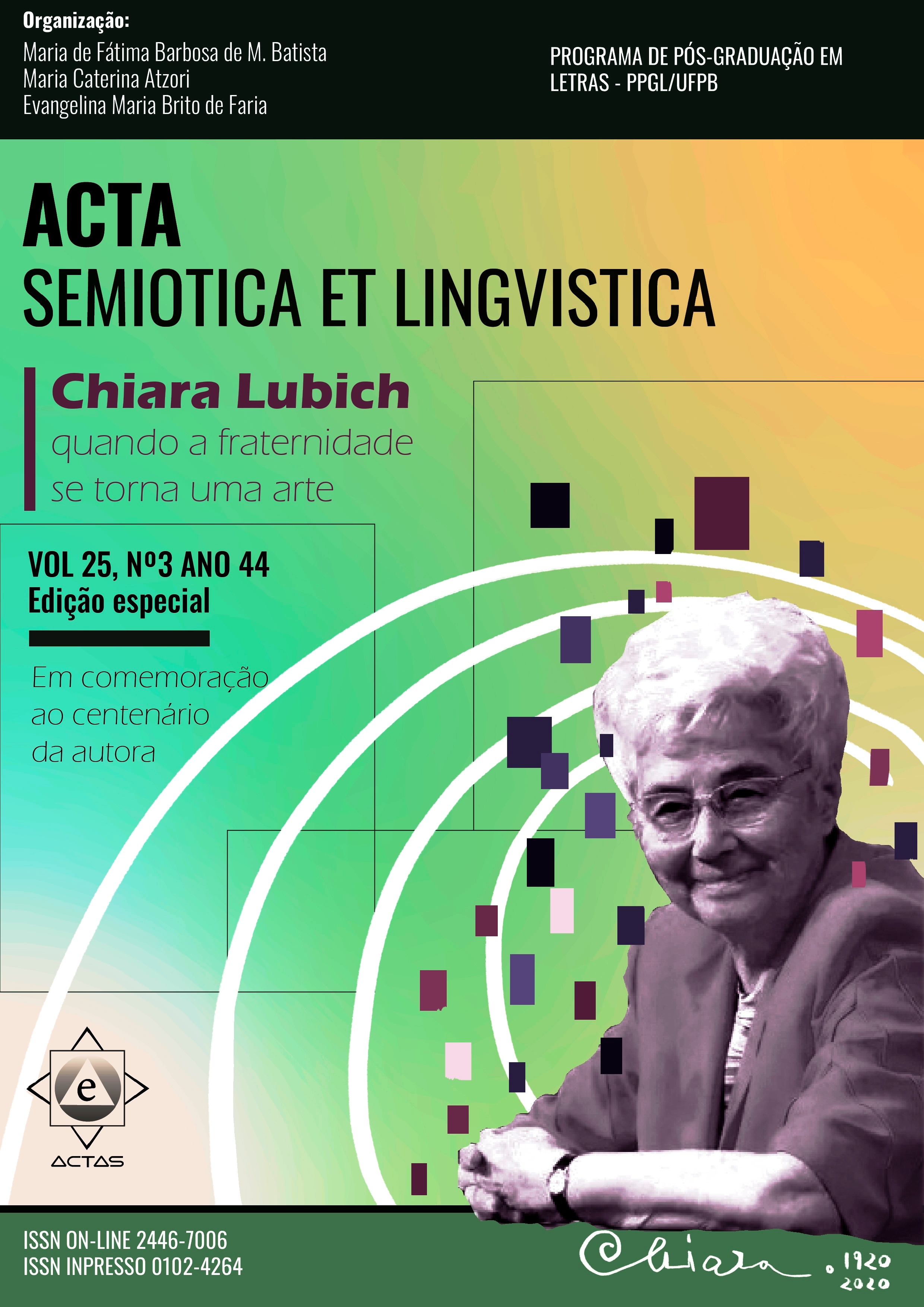
A MÍSTICA TEOPOÉTICA DE CHIARA LUBICH
DOI:
https://doi.org/10.22478/ufpb.2446-7006.44v25n3.55512Resumo
Existe um estreito vínculo entre a mística e a poesia. Tanto uma quanto outra é resultante de um colóquio com aquilo que habita o mais profundo do ser. Para o poeta, seu próprio eu; para o místico, o transcendente. Exatamente por ser assim, a poesia que nasce da mística traz, em suas linhas e entrelinhas, os resultantes recamos de luzes como cantos de amor ao Amor por excelência e, por conseguinte, destinados ao bem da humanidade, mesmo se retratam experiências singulares vivenciadas quer sejam nas mais longínquas terras, nos recantos mais desérticos, trancafiadas dentro dos claustros, ou no coração das massas, lado a lado com os seus pares. Esses colóquios, transmutados em versos, têm o poder de extrapolar os delimitados espaços das religiões para penetrar no âmago do ser humano, independente de suas crenças ou descrenças. Assim, teologia e literatura se entrelaçam interdisciplinarmente, ambas alicerçadas em duas vertentes: a inspiração e a palavra, para seguirem em direção ao Belo e se encontrarem na teopoética que traça liames entre teologia e poesia, teologia e literatura, teologia e estética. É isso que buscaremos nesta comunicação: a mística teopoética inclusiva de Chiara Lubich, escrita para todos, decorrente de seu pessoal e contínuo colóquio com o Transcendente – Deus.
Downloads
Downloads
Publicado
Como Citar
Edição
Seção
Licença
Declaração de Direito Autoral
Os artigos submetidos a revista Acta Semiotica et Lingvistica estão licenciados conforme CC BY. Para mais informações sobre essa forma de licenciamento, consulte: http://creativecommons.org/licenses/by/4.0
A disponibilização é gratuita na Internet, para que os usuários possam ler, fazer download, copiar, distribuir, imprimir, pesquisar ou referenciar o texto integral dos documentos, processá-los para indexação, utilizá-los como dados de entrada de programas para softwares, ou usá-los para qualquer outro propósito legal, sem barreira financeira, legal ou técnica.
1) Autores mantém os direitos autorais e concedem à revista o direito de primeira publicação, com o trabalho simultaneamente licenciado sob a Licença Creative Commons Attribution que permite o compartilhamento do trabalho com reconhecimento da autoria e publicação inicial nesta revista.
2) Autores têm autorização para assumir contratos adicionais separadamente, para distribuição não-exclusiva da versão do trabalho publicada nesta revista (ex.: publicar em repositório institucional ou como capítulo de livro), com reconhecimento de autoria e publicação inicial nesta revista.
3) Autores têm permissão para publicar e distribuir seu trabalho online (ex.: em repositórios institucionais ou na sua página pessoal) a qualquer ponto antes ou durante o processo editorial, já que isso pode gerar alterações produtivas, bem como aumentar o impacto e a citação do trabalho publicado.