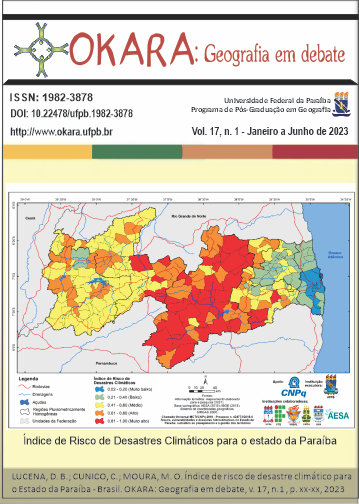
ÍNDICE DE RISCO DE DESASTRE CLIMÁTICO PARA O ESTADO DA PARAÍBA - BRASIL
DOI:
https://doi.org/10.22478/ufpb.1982-3878.2023v17n1.68164Resumo
O artigo tem como objetivo analisar o Índice de Risco de Desastre Climático (IRDC) para o estado da Paraíba, considerando os diferentes graus de vulnerabilidade socioambiental e as áreas suscetíveis a seca e a estiagem, para o recorte temporal de 1994 a 2018. Utilizaram-se dados de chuvas diárias obtidas da Agência Executiva de Gestão das Águas da Paraíba, informações socioeconômicas e de infraestrutura do Instituto Brasileiro de Geografia e Estatística e registros dos desastres a partir dos decretos de reconhecimento inventariados no site do Ministério da Integração e do Desenvolvimento Regional. Os dados foram organizados em um banco de dados georreferenciados para a construção das temáticas necessárias para a elaboração do IRDC, ou seja, a suscetibilidade a seca e os desastres climáticos. Para tanto, foi necessária a normatização das variáveis, tendo em vista que possuem diferentes unidades de mensuração. Para análise integrada, realizou-se a combinação geoespacial da vulnerabilidade social; da suscetibilidade a seca e a estiagem; e a frequência de registros de desastres de origem climática (seca e estiagem) nas regiões pluviometricamente homogêneas do estado. Os resultados obtidos indicam que 20% dos municípios paraibanos encontra-se sob a condição de muito alto IRDC, que quando acrescidos da classe alta, esse percentual totaliza 42% dos municípios (93 municípios), concentrados, espacialmente, na porção mais central do território (regiões do Cariri e do Curimataú paraibano) e, afetando 23% da população do estado. Esses municípios apresentam condições similares, tais como: o número elevado de dias secos consecutivos, condições econômicas restritivas, que prejudicam a equidade social e intensificam a vulnerabilidade. A identificação do IRDC ao nível municipal deve ser compreendida como insumo para a gestão dos riscos ambientais e para a ampliação da cultura de redução desses riscos por meio de ações que possam ser desenvolvidas por setores da sociedade civil e pelos governos municipais e estaduais.
Downloads
Downloads
Publicado
Como Citar
Edição
Seção
Licença
Direitos Autorais para artigos publicados na revista OKARA: Geografia em Debate são do autor(a), com direitos de primeira publicação para a revista. O trabalho publicado será considerado colaboração não remunerada, uma vez que OKARA: Geografia em Debate tem caráter de divulgação acadêmica e científica, não comercial. Em virtude de aparecerem nesta revista de acesso público, os artigos são de uso gratuito, com atribuições próprias, em aplicações educacionais e não-comerciais, sempre que citada a fonte.