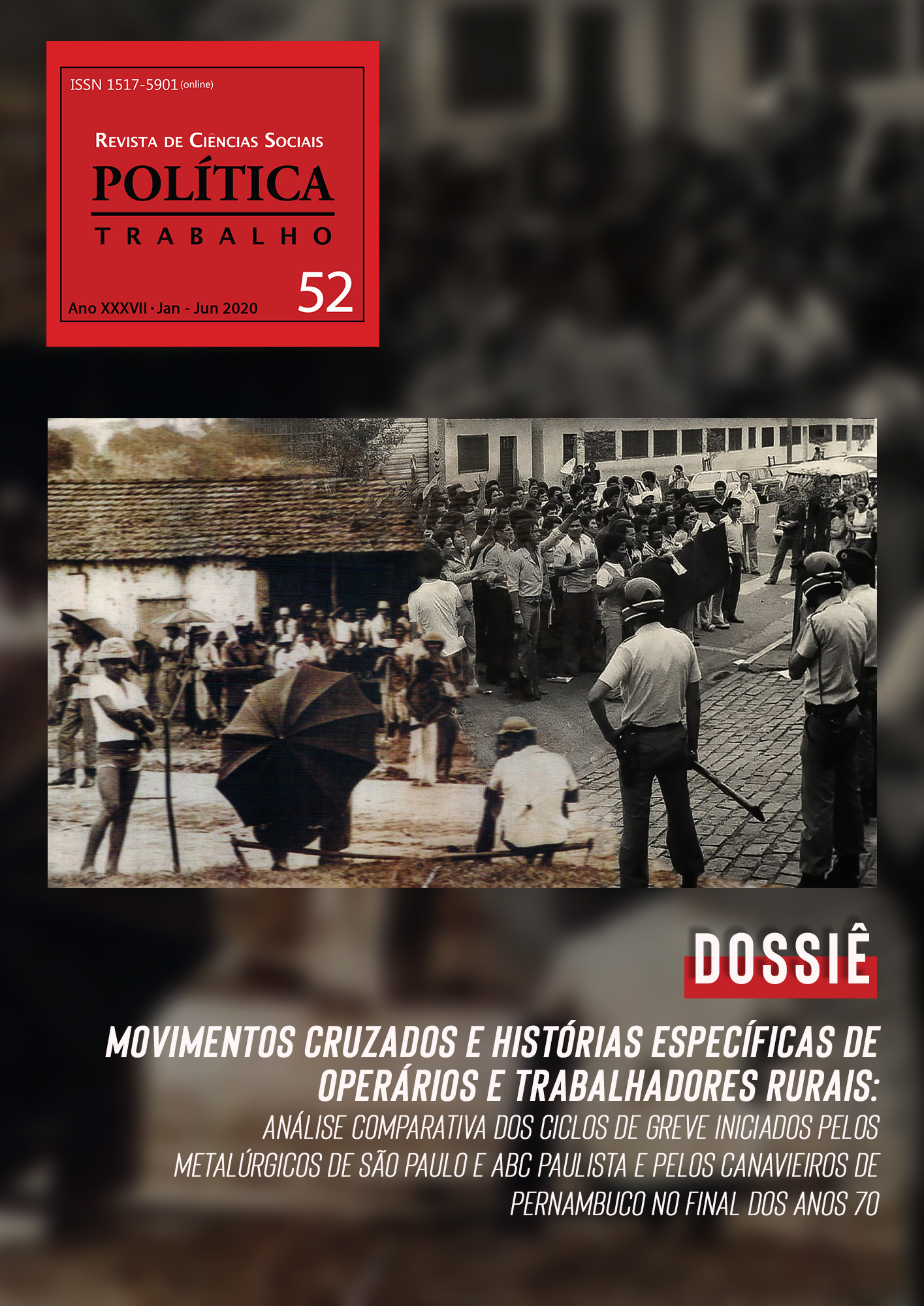
OS TRABALHADORES CANAVIEIROS DE PERNAMBUCO E O “NOVO SINDICALISMO”
revisitando a questão
DOI:
https://doi.org/10.22478/ufpb.1517-5901.37v1n52.51698Resumo
As greves ocorridas entre 1978 e os primeiros anos da década de 1980 projetaram o Sindicato dos Metalúrgicos de São Bernardo do Campo e Diadema (SP) e a figura de Luís Inácio Lula da Silva como expressões de um novo campo de referência no sindicalismo brasileiro, conhecido como “novo sindicalismo”, tendo sido essa a matriz para a criação do Partido dos Trabalhadores (PT) e da Central Única dos Trabalhadores (CUT). No mesmo período, no Nordeste do país, na tradicional plantation de cana-de-açúcar, os trabalhadores vinham rearticulando uma história de lutas que havia tido importante expressão no período pré-64 e que não tinha sido completamente interrompida durante o regime militar. A greve dos canavieiros de Pernambuco, em 1979, foi um marco na retomada da luta sindical no campo. Entretanto o ciclo de greves de canavieiros no Nordeste, que se estendeu até meados dos 1980, não alcançou a mesma repercussão política e relevância acadêmica que as greves do ABC e o “novo sindicalismo”, sobre os quais os estudos de John Humphrey, Amnéris Maroni, Ricardo Antunes, Laís Abramo, Iram Jácome Rodrigues, entre outros, debateram acerca de seus desdobramentos políticos. Este artigo retoma a memória das greves dos canavieiros de Pernambuco e as práticas sindicais que a elas estiveram associadas, procurando discutir seus significados para a trajetória do sindicalismo brasileiro desde então. Busca-se revisitar as interpretações produzidas sobre aqueles acontecimentos, de modo a levantar algumas problematizações, sobretudo em relação ao tema do “novo sindicalismo”.
Palavras-chave: Greves. Canavieiros. Pernambuco. Sindicalismo.
Downloads