Science in Dispute:
Counter-hegemonic Validation and Social Appropriation of Knowledge on the Effects of Agrochemicals in Argentina
DOI:
https://doi.org/10.22478/ufpb.2447-9837.2026.n21.76361Abstract
In 1996, Argentina approved the use of glyphosate-resistant genetically modified seeds, consolidating an agro-industrial model dependent on agrochemicals. Between 1993 and 2014, the consumption of these substances increased more than twelvefold, reaching 370 million kilograms, three-quarters of which corresponded to glyphosate (Sousa Casadinho, 2007). In this context, the aim of this article is to analyze counterhegemonic scientific validation processes regarding the effects of agrochemicals on health and the environment, identifying strategies, obstacles, and forms of social appropriation of knowledge. The research adopts a qualitative approach with an ethnographic basis, drawing on in-depth interviews, participant observations, and documentary analysis of scientific publications, technical reports, and outreach materials. The results show that counter-hegemonic validation does not face symmetrically distributed obstacles: while corporations install narratives of innocuousness without peer review, critical researchers must navigate the most demanding academic validation devices for their findings to be recognized. This evidentiary asymmetry operates on two simultaneous planes: the regulatory, where the State approves substances based on 90-day studies provided by the companies themselves; and the epistemic, where critical knowledge is discredited for circulating outside hegemonic channels. Cases such as the study by Séralini et al. (2012) or EMISA’s findings on glyphosate in cotton show that counter-hegemonic science in Argentina is not an anomaly of the scientific system: it is its most eloquent symptom.
Keywords: Agrochemicals. Scientific validation. Counter-hegemonic knowledge. Socio environmental health.
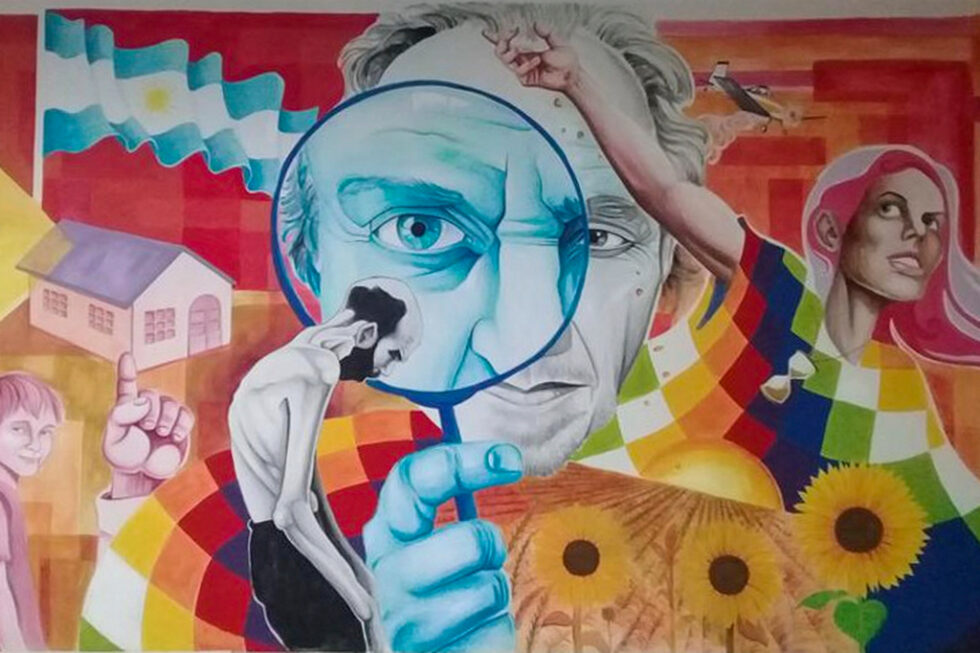
Title of cover photograph: Pueblos Fumigados. Author: Germán Villamor.
Downloads
Downloads
Published
How to Cite
Issue
Section
License
- Autores mantém os direitos autorais e concedem à revista o direito de primeira publicação, com o trabalho simultaneamente licenciado sob a Licença Creative Commons Attribution que permite o compartilhamento do trabalho com reconhecimento da autoria e publicação inicial nesta revista.
- Autores têm autorização para assumir contratos adicionais separadamente, para distribuição não-exclusiva da versão do trabalho publicada nesta revista (ex.: publicar em repositório institucional ou como capítulo de livro), com reconhecimento de autoria e publicação inicial nesta revista.
- Autores têm permissão e são estimulados a publicar e distribuir seu trabalho online (ex.: em repositórios institucionais ou na sua página pessoal) a qualquer ponto antes ou durante o processo editorial, já que isso pode gerar alterações produtivas, bem como aumentar o impacto e a citação do trabalho publicado (Veja O Efeito do Acesso Livre).