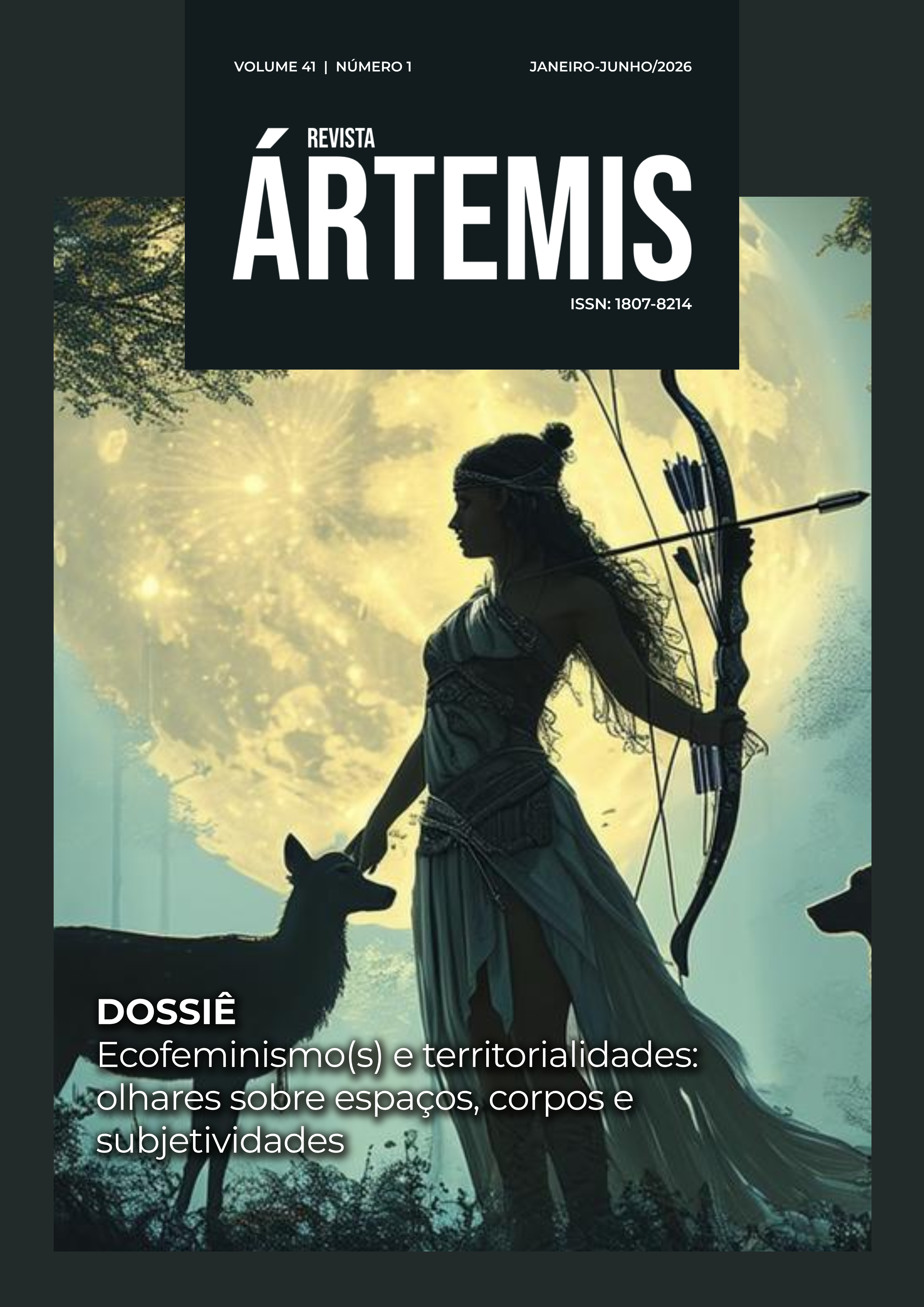
Maternidade, trabalho e exploração da terra: uma leitura de A árvore mais sozinha do mundo
DOI:
https://doi.org/10.22478/ufpb.1887-8214.2026v41n1.78791Keywords:
Maternidade, Trabalho, Exaustão da terra, Mariana Salomão CarraraAbstract
This article proposes a critical analysis of the novel A árvore mais sozinha do mundo, by Mariana Salomão Carrara, based on the categories of motherhood, labor, and land exhaustion, examining how these are embedded within the logic of capital in contemporary society. The novel prompts an urgent reflection on the relationships between humans and non-humans in a world in collapse. In this context, it explores how the intertextual structure between the internal and external dimensions of fiction activates contemporary mechanisms, such as the hyperobjects that continuously reshape life on Earth. Consequently, the discussion incorporates the contributions of Achille Mbembe (2025) regarding the reorganization of the terrestrial community; the feminist perspective of Silvia Federici (2022) and Cristina Stevens (2005), among others, concerning motherhood and labor intersected by gender; as well as the considerations of Graham Allen (2000), Greta Gaard (2017), Alaimo (2017) and Timothy Morton (2023) regarding ecological thought, ecofeminism, and its intertextual field.
Downloads