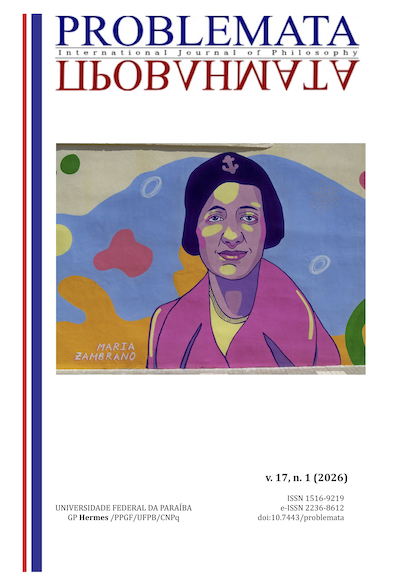
A ANTÍGONA DE MARÍA ZAMBRANO E AS POSSIBILIDADES DE UMA VIDA QUEBRADA
DOI:
https://doi.org/10.7443/problemata.v17i1.78733Palavras-chave:
Antígona, María Zambrano, Quebra, Jota MombaçaResumo
Este estudo articula a reinterpretação de Antígona realizada por María Zambrano ao conceito de "quebra" desenvolvido por Jota Mombaça, com o objetivo de explorar as possibilidades de uma vida ferida. A análise parte da tumba zambraniana como espaço de tempo, consciência e reconhecimento de si; em seguida, por sua vez, aproxima-se a "quebra" enquanto condição ético-estética de vidas atravessadas por feridas históricas e socialmente constituídas. Sustenta-se que Antígona permite pensar uma existência cuja ferida se converte em presença, palavra e resistência. Desse modo, o artigo relaciona a consciência trágica da personagem ao problema atual das vidas marcadas por violências familiares, sociais e políticas. A partir desse diálogo, busca-se evidenciar que a vida quebrada pode produzir modos de enunciação e permanência diante das forças que procuram silenciá-la, sem, com isso, converter a dor em virtude nem romantizar a violência que atravessa sua constituição histórica, social, política e simbólica.
Downloads
Referências
ANZALDÚA, G. Bordenland/Las Fronteras. Tradução de Carmen Valle. ed. Madrid: Capitán Swing Libros, 2016.
COSTA, S. Antígona de María Zambrano: destemor, subversão e criação poética. Filosofia Unisinos, São Leopoldo, v. 25, n. 2, p. 1–14, 2024. DOI: 10.4013/fsu.2024.252.10
MOMBAÇA, J. Não vão nos matar agora. Rio de Janeiro: Cobogó, 2021.
ZAMBRANO, M. La Tumba de Antígona. Barcelona: Anthropos, 1986.
Downloads
Publicado
Como Citar
Edição
Seção
Licença
Copyright (c) 2026 Felipe Augusto Alves Soares , Jelba Erlinda Brooks Asencio

Este trabalho está licenciado sob uma licença Creative Commons Attribution 4.0 International License.
Autores que publicam nesta revista concordam com os seguintes termos:
- Autores mantém os direitos autorais e concedem à revista o direito de primeira publicação, com o trabalho simultaneamente licenciado sob a Licença Creative Commons Attribution que permite o compartilhamento do trabalho com reconhecimento da autoria e publicação inicial nesta revista.
- Autores têm autorização para assumir contratos adicionais separadamente, para distribuição não-exclusiva da versão do trabalho publicada nesta revista (ex.: publicar em repositório institucional ou como capítulo de livro), com reconhecimento de autoria e publicação inicial nesta revista.
- Autores têm permissão e são estimulados a publicar e distribuir seu trabalho online (ex.: em repositórios institucionais ou na sua página pessoal) a qualquer ponto antes ou durante o processo editorial, já que isso pode gerar alterações produtivas, bem como aumentar o impacto e a citação do trabalho publicado (Veja O Efeito do Acesso Livre).